


American Badgers and Coyotes - an unlikely friendship
Updated: Dec 18, 2025
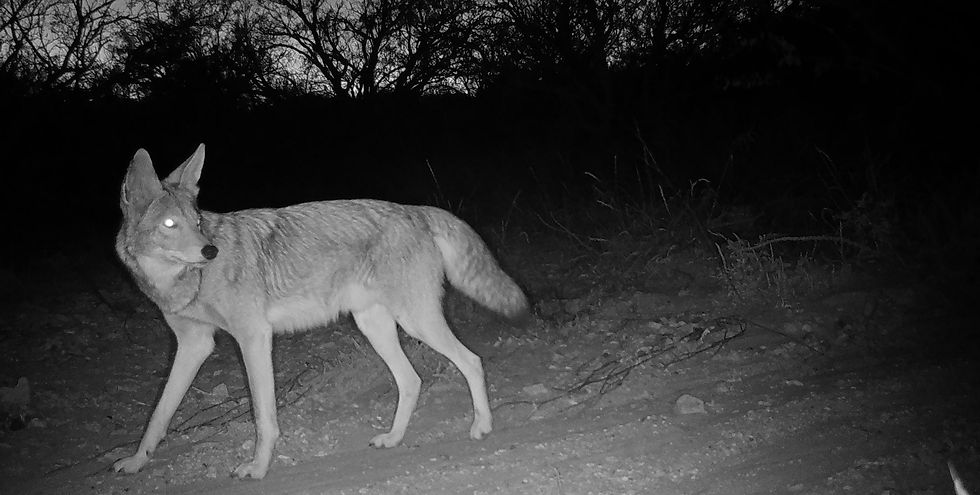
Ecosystems are full of symbiotic relationships, which are long term interactions between different organisms. Some of these interactions are one-sided, some are parasitic, and occasionally some benefit both organisms, which is called a mutualistic relationship. Mutualistic relationships are not common in the wild because competition for resources heavily influences wildlife behavior. Especially when two predators have a similar prey base, they are competing for survival and would not usually associate with one another unless fighting over food. But this unique bond is sometimes formed between coyotes and badgers! These two mesopredators occupy similar habitats, have similar diets, and when resources are plentiful, they will form an unlikely friendship that helps both survive. Coyotes (Canis latrans) are one of our most common visitors to the Borderlands Wildlife Preserve (BWP), next to white-tailed deer, javelinas, and skunks. American badgers (Taxidea taxus) are a rare sight in the borderlands, as they are nocturnal and spend most of their time underground, but we do see them on our cameras once or twice a year. While their rare (and heartwarming) alliance has not been documented at BWP, they have been seen in open spaces like Colorado (please see cute photos here).
Coyotes are opportunistic predators that hunt small mammals, reptiles, invertebrates, and birds, and will also eat some vegetation like cactus fruit or mesquite beans here in the desert southwest. They primarily eat meat and will hunt solitarily, or form pairs if tracking larger prey. When hunting alone they will usually silently stalk their prey and pounce once they are close enough, and then chase them if necessary. Coyotes can run over 40 mph in quick chases, but can also sustain speeds of 20-30 mph when following prey for long distances. Coyotes are incredibly adaptive and resilient — they’ve expanded their range across North America and can now be found from the west to the east coast, as far north as Alaska, and south into Mexico. They occupy a wide diversity of habitats, including our low deserts and grasslands, and can even thrive near growing urbanization and human disturbance. This is attributed to their flexible diet, keen senses, supportive social structure, and general intelligence.
Badgers around the world are designed to dig, and are well-known for their ferocity, tenacity, and badassery. The American badger is considered the fastest-digging animal in North America and can easily out pace a human with a shovel. Their low, stocky body and small head helps them navigate low underground tunnels, and they even have a specialized eyelid called a “nictitating membrane” that helps keep dirt out of their eyes. Badgers have menacing two-inch long, curved claws on their front feet that they use to dig after subterranean prey like prairie dogs and ground squirrels. They also dig underground burrows called “setts” where they live. Their powerful front legs and long, blunt-ended claws break and loosen dirt that is then kicked out with their hind legs that are equipped with slightly shorter claws.

These two mesopredators live very distinct lives but have been observed hunting together, forming a mutualistic relationship, meaning both benefit from each other’s efforts. Badgers use their digging power to go after burrowing animals, and if they are flushed out, the coyote is ready to utilize its speed and chase after it. This hunting method provides both animals with a higher chance of capturing prey. This type of behavior is often seen during warmer months when prey is more active and typically more abundant, which facilitates camaraderie over competition. During the winter when animals are hibernating, badgers are able to dig them up without giving them time to flee, and don't need the speedy coyote.
The BWP is home to a series of 12 wildlife cameras that are used to document wildlife presence and share with the public who live in and travel through the BWP. While we’ve never caught this coyote-badger hunting behavior on our cameras, it is interesting to know that when the timing is right, these two species will band together and help each other survive.
I have seen the viral videos captured on wildlife cameras before (please watch the companionship in action here!), but was inspired to learn more about these two species after capturing a new video of a badger at BWP the same month I watched Fantastic Mr. Fox for the first time. While our resident badgers probably aren’t the best lawyers, I think Roald Dahl portrayed their willingness to help a fellow wild animal in a wonderfully whimsical way.


Comments